


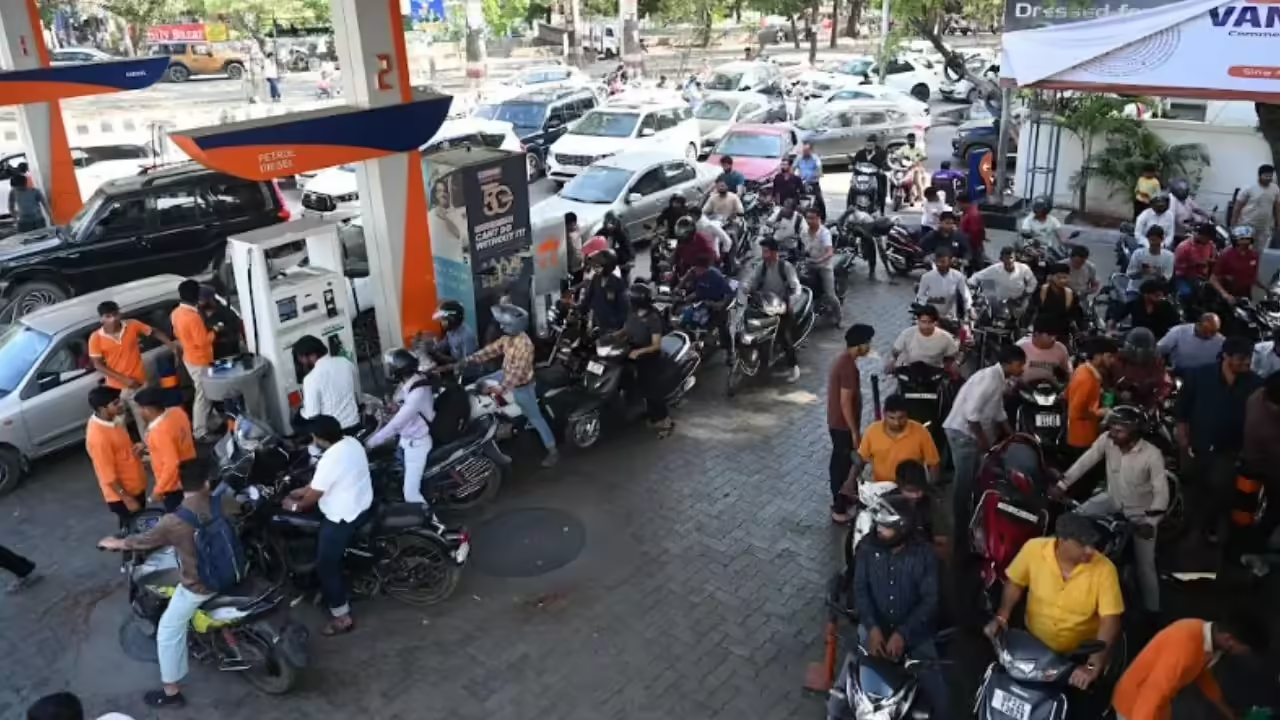
India is rapidly moving toward higher ethanol-blended petrol as crude oil prices surge globally. The government has now introduced standards for E22 to E30 fuel blends.
India Prepares for E30 Fuel Amid Petrol and Diesel Concerns
India is accelerating its ethanol blending mission as global crude oil prices continue to rise due to ongoing Middle East tensions. The central government is now preparing for the next phase of fuel blending, which could allow petrol to contain up to 30% ethanol in the coming years.
Currently, E20 fuel has already started reaching several parts of the country. However, the government is now moving a step ahead by introducing technical standards for new ethanol fuel blends including E22, E25, E27, and E30. Moreover, this step highlights India’s growing focus on reducing dependence on imported crude oil.
The Bureau of Indian Standards (BIS) recently issued a notification defining the specifications for these upcoming fuel blends. Although the notification does not make E30 fuel mandatory immediately, it creates the foundation for future nationwide implementation.
E22 to E30 Petrol Blends Get Official Technical Standards
The latest BIS notification mainly focuses on technical guidelines required for fuel companies and vehicle manufacturers. Therefore, oil companies can now start preparing infrastructure and testing systems for higher ethanol-blended fuels.
According to reports, the new standards will support petrol mixed with ethanol levels ranging from 22% to 30%. Meanwhile, the government continues promoting cleaner and locally produced fuel alternatives to improve India’s energy security.
The decision comes during a period of uncertainty in the global oil market. The ongoing tensions involving Iran, the US, and Israel have increased fears of supply disruptions. Consequently, oil-importing countries like India are now searching for safer and more sustainable fuel solutions.
Why India Is Increasing Ethanol Blending in Petrol
India remains one of the world’s largest crude oil importers. Because of this heavy dependence, fluctuations in international oil prices directly impact fuel costs within the country. Additionally, any disruption in global supply chains creates pressure on India’s economy.
The Strait of Hormuz has become a major concern in recent months. Around 20% of the world’s oil supply passes through this route. Therefore, any geopolitical conflict in the region can trigger a serious fuel crisis.
To tackle these risks, the Indian government has been aggressively promoting ethanol blending programs. Ethanol, which is mainly produced from sugarcane and agricultural products, can reduce crude oil imports while also supporting domestic farmers.
Moreover, ethanol-blended fuel helps lower carbon emissions compared to traditional petrol. As a result, the move also supports India’s long-term environmental goals and cleaner mobility plans.
Automakers Are Developing Flex-Fuel Vehicles
Vehicle manufacturers in India have already started preparing for higher ethanol fuel usage. Several automakers are currently developing flex-fuel vehicles capable of running on multiple ethanol blends.
Meanwhile, some companies have showcased prototype vehicles in the Indian market to demonstrate compatibility with ethanol-rich fuels. These vehicles can automatically adjust engine performance according to the ethanol percentage in petrol.
In addition, the government has encouraged automobile companies to speed up research and production of flex-fuel engines. Therefore, future vehicles in India may become more compatible with E20 and even E30 fuel blends.
| Fuel Blend | Ethanol Percentage |
|---|---|
| E20 | 20% Ethanol |
| E22 | 22% Ethanol |
| E25 | 25% Ethanol |
| E27 | 27% Ethanol |
| E30 | 30% Ethanol |
What Will Be the Impact of Higher Ethanol in Petrol?
Higher ethanol blending can bring both benefits and challenges. On one hand, India can significantly reduce crude oil imports and improve fuel security. Additionally, farmers may benefit because ethanol production increases demand for agricultural crops like sugarcane and maize.
On the other hand, some older vehicles may face compatibility issues with higher ethanol content. Therefore, vehicle owners may eventually need engines designed specifically for higher ethanol blends.
Fuel efficiency could also slightly change depending on vehicle type and engine technology. However, experts believe modern engines can adapt effectively with proper tuning and manufacturing upgrades.
Recently, Prime Minister Narendra Modi also urged citizens to conserve fuel during the petrol and diesel crisis. Meanwhile, several public figures were seen promoting electric vehicles, clearly reflecting the government’s broader strategy to reduce reliance on fossil fuels.
India’s Future Fuel Strategy Is Changing Rapidly
India’s push toward E30 fuel represents a major shift in the country’s energy policy. Although the transition may happen gradually, the groundwork has already started through new BIS standards and ongoing vehicle development.
Moreover, rising geopolitical tensions and unstable crude oil prices are forcing countries worldwide to explore alternative fuel solutions. Therefore, ethanol blending is expected to play a crucial role in India’s future transportation ecosystem.
As the government continues investing in ethanol infrastructure and flex-fuel technology, consumers may soon witness significant changes at fuel stations and in upcoming vehicle models.
| FAQ | Answer |
|---|---|
| What is E30 fuel? | E30 fuel contains 30% ethanol mixed with petrol. |
| Is E30 fuel mandatory in India? | No, the government has only introduced technical standards for now. |
| Why is India promoting ethanol blending? | India wants to reduce crude oil imports and improve energy security. |
| Can current vehicles use E30 petrol? | Most current vehicles are designed for lower blends, while flex-fuel vehicles support higher blends. |