
The GAC-FAW Deal May Be a Catalyst for Auto Industry Consolidation
The planned move is being viewed as a possible solution to China’s long-standing automobile overcapacity problem. Earlier attempts to combine state-owned carmakers faced challenges related to job security, regional interests and protectionism by local governments.
Under the GAC-FAW proposal, the companies may focus on integrating selected foreign-brand joint ventures instead of merging the two parent companies. Analysts believe this could reduce the impact of production cuts on domestic stakeholders and simplify capacity management.
Claire Yuan, a Hong Kong-based credit analyst at S&P Global Ratings, said the deal could serve as a trial for broader integration among China’s state-owned companies.
Also Read: Maruti Suzuki Dzire Tops India’s SUV-Dominated Car Market
The agreement may also indicate how state-owned enterprises from different regions can cooperate after facing difficulties in working together in the past.
China Has the Capacity to Produce More Than 55 Million Vehicles
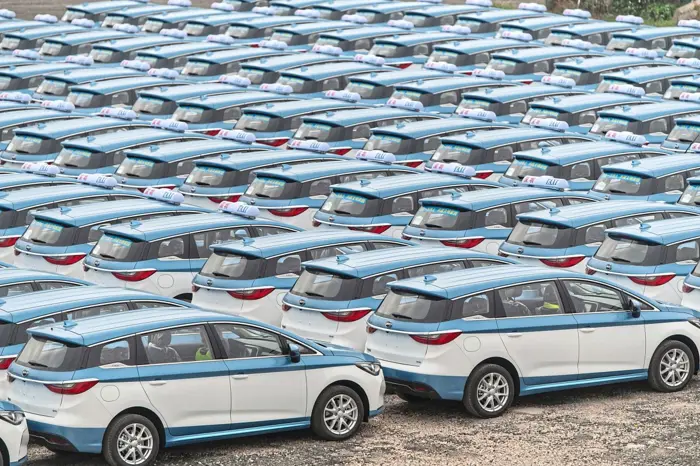
Over the past few years, China’s automobile industry has developed massive production capabilities. Data from the Gasgoo Automotive Research Institute in Shanghai shows that the country has enough capacity to produce more than 55 million vehicles annually.
However, the China Passenger Car Association said domestic vehicle sales were less than half of that capacity last year. This imbalance has increased competition among manufacturers, with production capacity exceeding demand.
To maintain sales, many automakers have reduced prices and offered incentives. Although these measures have supported demand, they have also affected profitability across the industry.
| Indicator | Details |
|---|---|
| Annual Production Capacity | More than 55 million vehicles |
| Domestic Vehicle Sales | Less than half of annual production capacity |
| Vehicle Exports | More than 7 million units, according to industry estimates |
| Industry Profits | Down 20 percent in the first half of the year |
| Companies Involved | GAC and FAW Group |
Excess Vehicle Production Is Increasing Export Pressure
Chinese automakers have increased exports as they search for overseas markets.The China Association of Automobile Manufacturers reported that vehicle exports grew by 21 percent to more than seven million vehicles.
Higher exports have helped manufacturers utilise spare production capacity. However, they have also led to greater trade friction, with several countries raising concerns about the impact of Chinese vehicle imports on their local automobile industries.
Also Read: Oben Rorr Evo EV Bike Gets 25,000 Bookings in 15 Days
Electric vehicles have been a major driver of China’s automobile industry. The country has promoted EV manufacturing and attracted new manufacturers investing heavily in production facilities and supply chains.
As the number of manufacturers has increased while the number of buyers has remained relatively stable, the industry has experienced price reductions, declining margins and pressure to increase international sales.
Automakers Are Facing Tough Times
The overproduction problem has reduced profitability across China’s automobile industry. Government data showed that industry profits fell by 20 percent in the first half of the year.
Even leading manufacturers such as BYD have faced pressure to maintain profitability in the domestic market. Strong competition and aggressive price cuts have made it difficult for companies to convert high sales volumes into strong profits.
Foreign automakers are also feeling the pressure. Toyota, one of the world’s largest carmakers, has reportedly lagged behind Chinese manufacturers in the number of new models launched.
Toyota’s sales in China declined by 24 percent in July, marking the sixth consecutive month of decline, according to the report.
Foreign Automakers May Face Production Cuts
A potential merger of GAC and FAW’s Toyota-related operations could have implications for foreign automakers operating in China.
Most international carmakers entered the Chinese market through joint ventures with local companies. Historically, these partnerships were required for foreign manufacturers seeking to produce vehicles in China.
China opened the automobile sector to full foreign ownership in 2019. However, many joint ventures, particularly older partnerships, continue to remain important in the market.
Wider consolidation could pressure foreign brands to reduce production or accept lower sales volumes. Analysts believe that giving up some volume may help companies protect profit margins in an intensely competitive market.
Previous Merger Attempts Faced Challenges
China has previously attempted to merge state-owned automobile companies, but not all plans resulted in complete integration.
Last year, negotiations between Dongfeng Motor and Chongqing Changan Automobile did not bring the two companies together. Earlier initiatives also faced challenges related to jobs, regional economic interests and local government protection of automobile companies.
The GAC-FAW proposal may offer a different operating model by combining selected operations instead of creating a single automobile company.
Significance of the GAC-FAW Deal for China’s Auto Market
The proposed GAC-FAW deal does not represent a complete restructuring of China’s automobile industry. The two companies have not disclosed all details about the manufacturing operations involved, and its impact on production capacity remains unclear.
However, the proposal could become an important example of how China is attempting to address automobile overcapacity without fully merging two competing state-owned companies.
If successful, other automakers may follow the same model, leading to more joint-venture mergers and greater focus on profitability rather than sales volume in China’s automotive sector.
FAQ
| Question | Answer |
|---|---|
| Why is China’s auto industry facing a production glut? | China has built vehicle manufacturing capacity far above domestic demand, creating intense competition, price cuts and lower industry profits. |
| What is the GAC-FAW deal? | GAC plans to acquire a stake from FAW in an unspecified car-manufacturing venture by issuing GAC shares to FAW. |
| Why could GAC and FAW combine Toyota operations? | Both companies produce Toyota vehicles in China, leading analysts to believe their joint-venture operations could be consolidated. |
| How much vehicle production capacity does China have? | China has enough annual production capacity to manufacture more than 55 million vehicles, according to Gasgoo Automotive Research Institute data. |
| How are Chinese automakers dealing with excess production? | Automakers are using price discounts, expanding exports and considering consolidation to manage excess capacity and improve profitability. |