

Dixon Technologies is looking to move beyond smartphone assembly and strengthen its presence across the broader electronics manufacturing industry. The company is expanding its focus on electronics components such as camera modules while also increasing its capabilities in smartphones, laptops, IT hardware and other high-value manufacturing segments.
Dixon Technologies Chairman and founder Sunil Vachani told Bloomberg Television that the company aims to significantly improve its position in the global electronics manufacturing services (EMS) industry over the coming years.
Dixon Technologies Sets Global EMS Ranking Target
According to Sunil Vachani, Dixon Technologies aims to enter the global top 10 EMS companies within the next five years. The company has a longer-term target of reaching the global top 5 within 10 years.
Also Read: Jindal Supreme IPO Listing: GMP, ₹120 Debut on NSE
Business Standard reported that Dixon is currently outside the global top 10. The expansion strategy comes as India continues to strengthen its electronics manufacturing capabilities and expand its role in the global supply chain.
Dixon Technologies Looks Beyond Smartphone Manufacturing
Smartphone manufacturing remains the biggest part of Dixon Technologies’ business. According to Business Standard, smartphone manufacturing contributes more than 90% of the company’s revenue.
Dixon is looking to strengthen its presence across the electronics value chain. The company is expanding its focus on components such as camera modules while continuing to enhance its smartphone and laptop manufacturing capabilities.
Dixon Technologies manufactures products including smartphones, washing machines and television sets. The company has manufacturing partnerships with brands such as Motorola, Xiaomi, HP and Samsung.
Camera Modules and IT Hardware Expansion
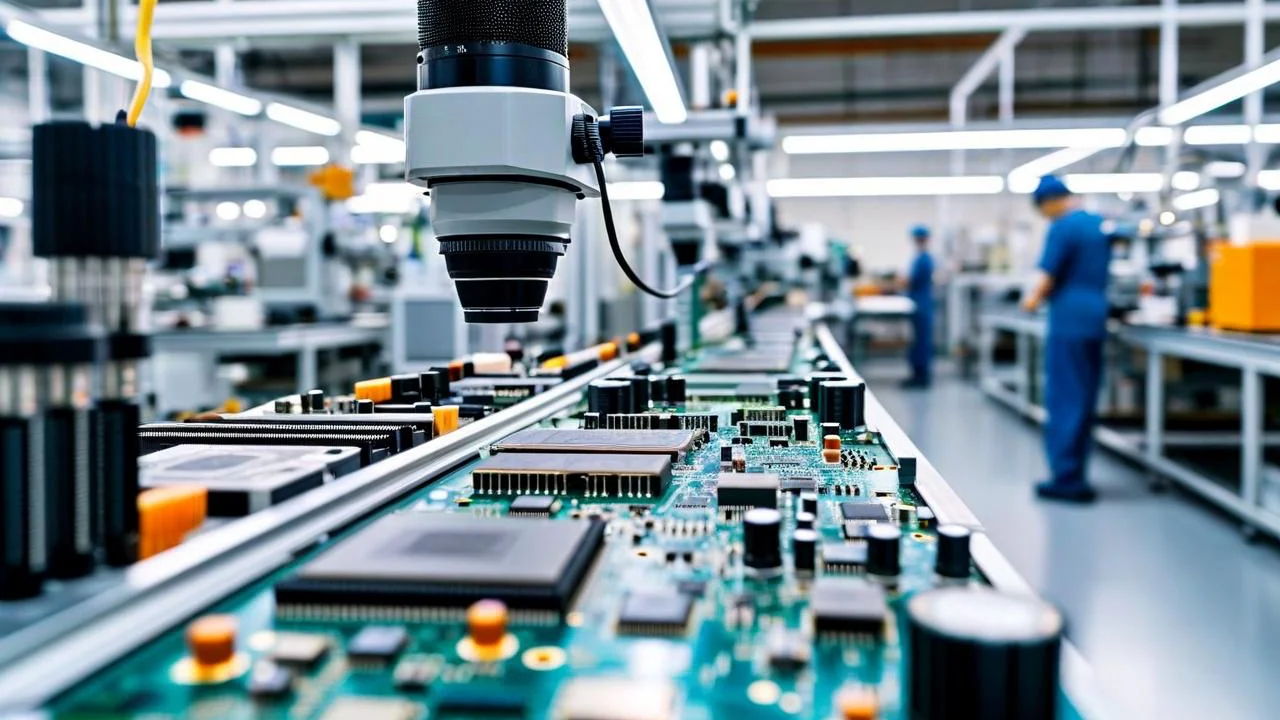
Electronics components and IT hardware are becoming important parts of Dixon Technologies’ diversification strategy. The company is expanding its camera module manufacturing capacity as it looks to increase its participation in higher-value electronics manufacturing.
Dixon Technologies holds a 51% stake in the camera module business through Kunshan Q-Tech India. According to the company’s FY26 annual report, Dixon plans to increase its camera module capacity from around 70 million to 180-190 million units over the coming years.
Also Read: Samsung India Profit Falls 36% to ₹7,228 Crore
The company is also looking to expand its IT hardware manufacturing operations. Business Standard reported that Dixon planned to open its second IT hardware plant by the end of November. The company is also exploring opportunities in enterprise servers and data centre hardware.
Dixon has partnered with a Taiwan-based company to manufacture optical equipment used in data centres. According to Sunil Vachani, India’s IT hardware imports amount to around $15 billion, presenting opportunities for domestic manufacturing.
Focus on Aerospace, Defence and Medical Electronics
Dixon Technologies is also exploring opportunities beyond smartphones and IT hardware. The company is looking at high-value electronics segments such as aerospace, defence, automotive, medical and industrial electronics.
The company’s FY26 annual report highlighted opportunities across these segments. Dixon is also working on backward integration, component localisation, process automation and smart manufacturing capabilities.
The company is gradually scaling its display and camera module facilities. According to the FY26 annual report, the expansion of these facilities could support gradual improvement in margins as their scale grows.
Dixon-Vivo Joint Venture and Smartphone Business
While Dixon Technologies is diversifying into new segments, it continues to expand its core smartphone manufacturing business. The company received government approval this year for a proposed joint venture with Vivo Mobile India.
Dixon Technologies will hold a 51% stake in the proposed joint venture, while Vivo Mobile India will hold the remaining 49% stake.
The joint venture is expected to strengthen Dixon’s smartphone manufacturing capabilities. At the same time, the company is working to increase its presence in components and other high-value electronics segments.
Exports are also an important part of Dixon Technologies’ broader strategy. The company aims to benefit from India’s growing role as a global electronics manufacturing base.
Dixon Technologies’ Growth Strategy Ahead
Dixon Technologies’ growth strategy is expanding beyond smartphone assembly into components, IT hardware, servers, data centre equipment and specialised electronics manufacturing. The company is also working to strengthen its engineering capabilities and component localisation.
Still, smartphone manufacturing accounts for more than 90% of the company’s revenue, according to Business Standard. Diversification into new segments will therefore remain an important part of Dixon’s longer-term growth strategy.
Dixon Technologies’ target of entering the global top 10 EMS companies within five years and the top 5 within 10 years reflects its broader expansion plans. The company’s investments in camera modules, IT hardware, defence, automotive, medical and other electronics segments are aimed at widening its manufacturing portfolio.
FAQ:
| Question | Answer |
|---|---|
| What is Dixon Technologies’ global EMS ranking target? | Dixon Technologies aims to enter the global top 10 EMS companies within five years and the global top 5 within 10 years. |
| How much of Dixon Technologies’ revenue comes from smartphone manufacturing? | According to Business Standard, smartphone manufacturing contributes more than 90% of Dixon Technologies’ revenue. |
| Which new segments is Dixon Technologies exploring? | The company is expanding into camera modules, IT hardware, servers, data centre equipment and high-value electronics segments such as aerospace, defence, automotive, medical and industrial electronics. |
| What is Dixon Technologies’ stake in the Vivo joint venture? | Dixon Technologies will hold a 51% stake in the proposed joint venture with Vivo Mobile India, while Vivo Mobile India will hold 49%. |
| What is Dixon Technologies’ planned camera module capacity? | According to the company’s FY26 annual report, Dixon plans to increase camera module capacity from around 70 million to 180-190 million units over the coming years. |
Source: Business Standard and Dixon Technologies FY26 annual report.