


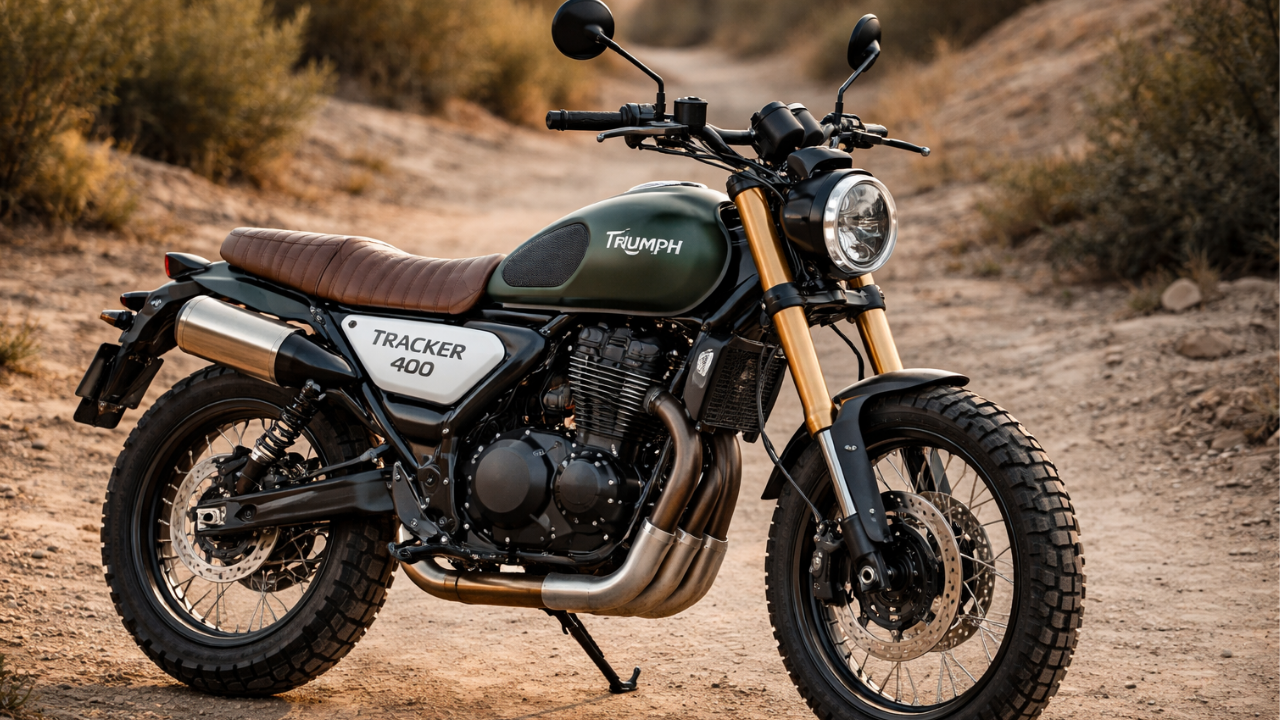
Triumph Tracker 400 enters the spotlight as a bold, flat-track-inspired motorcycle that prioritises style, emotion, and niche appeal in the fast-evolving mid-capacity bike segment.
Triumph Tracker 400 Market Position and Brand Strategy
The Triumph Tracker 400 is not just another addition to Triumph’s growing 400cc lineup. Instead, it represents a clear shift in intent. Moreover, Triumph now aims to build emotional connections rather than chasing volumes alone. At a time when the mid-capacity motorcycle segment feels crowded with safe and similar-looking machines, the Tracker 400 chooses a different path.
Meanwhile, with the Speed 400 and Scrambler 400 X already covering mainstream buyers, Triumph uses the Tracker 400 to add character to its portfolio. Therefore, this motorcycle exists for riders who want something expressive, distinctive, and visually dramatic. In addition, markets like India and the UK show rising demand for design-led motorcycles, especially among younger riders. Consequently, Triumph sees the Tracker 400 as a calculated risk that could strengthen brand identity.
Also Read: Triumph Tracker 350 India Launch Soon: Classic Flat-Track Design Meets Modern Tech
Why the Triumph Tracker 400 Matters in 2026
The global 350–450cc motorcycle segment is evolving quickly. However, instead of one-size-fits-all bikes, buyers now prefer clearly defined styles. Moreover, scramblers, café racers, and street trackers are creating strong subcultures within this segment.
Therefore, Triumph positions the Tracker 400 as a flat-track-inspired street machine. On the other hand, this move means accepting compromises in comfort and versatility. Yet, Triumph believes emotional appeal can outweigh practical limitations. Consequently, the Tracker 400 becomes a statement motorcycle rather than a neutral commuter.
Triumph Tracker 400 Engine Performance and Refinement
The Triumph Tracker 400 uses an updated version of the 398cc liquid-cooled, single-cylinder TR-Series engine. Moreover, this engine now produces around 42 bhp at 9,000 rpm and 37.5 Nm of torque. Additionally, it pairs with a six-speed gearbox and a torque-assist clutch for smoother shifts.
However, the concern lies not in the numbers but in how the engine delivers power. Triumph has pushed peak performance higher than the Speed 400. Consequently, the engine promises a sportier character. Meanwhile, early Speed 400 feedback already highlighted vibrations at higher revs.
Therefore, while the Tracker 400 should feel energetic in short city rides, sustained highway use may feel busy. On the other hand, riders who enjoy aggressive riding may appreciate the higher-revving nature. Ultimately, refinement takes a slight back seat to excitement.
Triumph Tracker 400 Design and Ergonomics
Design remains the strongest pillar of the Triumph Tracker 400. Moreover, the flat-track influence is instantly noticeable. The squared fuel tank, minimalist body panels, and side-mounted number boards give it a raw, race-inspired look.
However, this visual drama comes with ergonomic trade-offs. The handlebars sit wider and lower than the Speed 400. Consequently, the rider adopts a forward-leaning stance. Additionally, the seat height increases to around 805 mm, which may challenge shorter riders.
Therefore, while the bike feels agile in urban environments, long-distance comfort may suffer. On the other hand, Triumph clearly targets riders who value attitude over comfort.
Triumph Tracker 400 Features and Electronics
In terms of features, Triumph ensures the Tracker 400 remains modern. Moreover, it includes ride-by-wire throttle, dual-channel ABS, and switchable traction control as standard.
However, competition in this segment is intense. Meanwhile, rivals like the Husqvarna Svartpilen 401 offer TFT displays and quickshifters. Similarly, Royal Enfield’s Guerrilla 450 focuses on low-end torque and relaxed gearing.
Therefore, the Tracker 400 relies more on brand value and design than feature superiority. Consequently, buyers must decide whether visual appeal outweighs extra tech.
Triumph Tracker 400 vs Rivals: Competitive Reality
When compared directly, the Triumph Tracker 400 occupies a unique middle ground. It lacks the advanced electronics of the Svartpilen 401. However, it also feels less relaxed than Royal Enfield’s 450 platform.
Additionally, it overlaps with Triumph’s own Scrambler 400 X, which offers greater versatility. Therefore, the Tracker 400 appeals mainly to riders seeking individuality rather than practicality.
Triumph’s Bigger Plan for the 400cc Platform
The Tracker 400 and Thruxton 400 highlight Triumph’s evolving strategy. Instead of one versatile motorcycle, Triumph now builds multiple personalities on a shared platform. Moreover, this approach mirrors premium motorcycle strategies applied to a more affordable segment.
Consequently, if buyers respond positively, Triumph may introduce even more niche derivatives. However, if demand remains limited, the Tracker 400 could become a cult favourite rather than a mass seller.
Final Verdict on Triumph Tracker 400
The Triumph Tracker 400 refuses to play it safe. Instead, it chooses character, design, and emotional appeal over universal comfort. Therefore, riders who love bold styling and aggressive ergonomics will find it exciting.
On the other hand, those seeking refinement and versatility may look elsewhere. Ultimately, the Tracker 400 stands out precisely because it accepts its sharp edges. Consequently, its success depends on how many riders value personality over compromise.
| Feature | Details |
|---|---|
| Engine | 398cc single-cylinder, liquid-cooled |
| Power | Approx. 42 bhp |
| Torque | 37.5 Nm |
| Gearbox | 6-speed with torque-assist clutch |
| Seat Height | 805 mm (approx.) |
FAQs
| FAQ | Answer |
|---|---|
| Is Triumph Tracker 400 suitable for daily use? | Yes, but it prioritises style over long-distance comfort. |
| Does Tracker 400 offer modern safety features? | Yes, it includes ABS and traction control as standard. |