

McKinsey 2026 Tech Trends highlight 14 technologies that are shaping business, infrastructure and scientific development in 2026. McKinsey’s Technology Trends Outlook 2026 examines areas including artificial intelligence, robotics, semiconductors, cybersecurity, quantum technologies, mobility, space and energy.
The report groups the 14 trends into three broad areas: AI Revolution, Compute and Connectivity Frontiers, and Cutting-Edge Engineering. McKinsey has also added two new areas to its 2026 analysis: agentic software development and AI for scientific discovery and engineering.
McKinsey 2026 Tech Trends: 14 Technologies
| Category | Technology Trend |
|---|---|
| AI Revolution | AI Infrastructure and Model Architectures |
| AI Revolution | Agentic AI |
| AI Revolution | Applied AI |
| AI Revolution | Agentic Software Development |
| AI Revolution | AI for Scientific Discovery and Engineering |
| Compute and Connectivity Frontiers | Application-Specific Semiconductors |
| Compute and Connectivity Frontiers | Future of Connectivity |
| Compute and Connectivity Frontiers | Cybersecurity and Trustworthy Systems |
| Compute and Connectivity Frontiers | Quantum Technologies |
| Cutting-Edge Engineering | Future of Robotics |
| Cutting-Edge Engineering | Future of Life Sciences and Bioengineering |
| Cutting-Edge Engineering | Future of Mobility |
| Cutting-Edge Engineering | Future of Space Technologies |
| Cutting-Edge Engineering | Electrification and Renewables |
AI and Agentic Technology Are Expanding
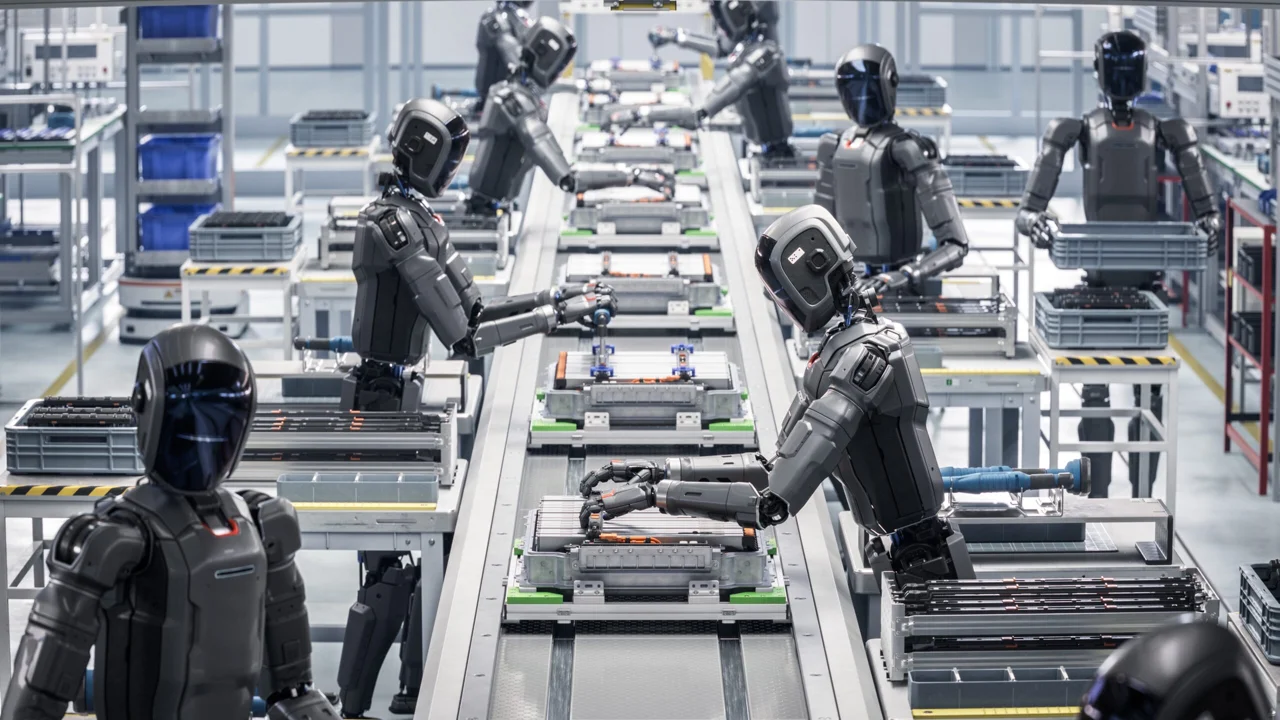 AI is moving beyond applications that mainly generate text, images or other content on a screen. McKinsey points to an emerging agentic era in which AI systems can perform more end-to-end digital tasks with less direct human intervention.
The report also highlights the development of physical AI. AI is increasingly being combined with robotics, mobility systems and wearable technologies. Robots are being developed with capabilities that allow them to understand their surroundings, make decisions and perform tasks in less predictable environments.
Also Read: IPO Calendar: 20 IPOs to Raise ₹1,292 Crore
McKinsey says physical AI is appearing first in areas such as manufacturing and logistics, where the potential economics are clearer. The technology could also extend into sectors such as healthcare, construction, agriculture and city infrastructure.
AI Is Changing Software and Scientific Research
Another major area highlighted by McKinsey is agentic software development. AI is changing how software is written, allowing developers to generate code at much higher speeds. This also creates new challenges because organizations need to review, test and securely deploy the increasing volume of AI-generated code.
AI is also being applied to scientific discovery and engineering. McKinsey highlights applications in areas such as biopharma and materials science. AI can generate large numbers of potential drug candidates and other scientific possibilities, but laboratory testing, clinical trials and regulatory processes still require substantial time.
The report describes this as a key challenge for organizations: AI can accelerate the generation of ideas and outputs, but the processes needed to validate those outputs cannot always move at the same speed.
Semiconductors, Cybersecurity and Energy Demand
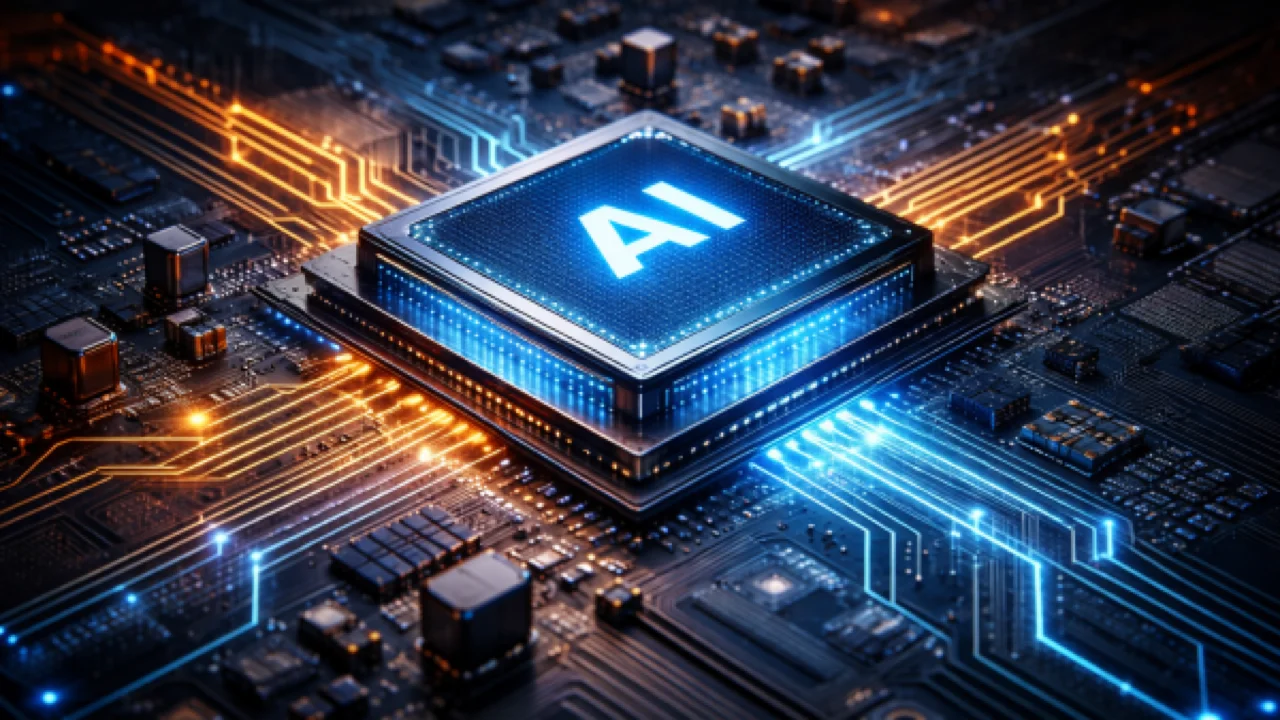 The expansion of AI is increasing demand for specialized computing infrastructure. McKinsey highlights application-specific semiconductors designed for particular AI workloads, especially inference, which involves running trained AI models to generate outputs.
The report notes that major technology companies are increasingly working with semiconductor companies to develop custom chips for AI workloads. These chips are designed to improve performance and efficiency for specific applications.
Also Read: Liqvd Digital IPO Gets 5.08x Subscription, Axiom Gas Debuts
Cybersecurity is also changing as AI becomes more widely used. Security teams can use AI to identify vulnerabilities faster, but attackers can also use AI to discover and exploit weaknesses more quickly. McKinsey describes this as a shrinking window for cybersecurity teams to respond to emerging threats.
Energy infrastructure is another important part of the technology outlook. McKinsey says energy technologies attracted nearly $200 billion in investment in 2025, while spending on AI infrastructure doubled in a single year.
The report also highlights the growing pressure that data centers are placing on electricity infrastructure. Data centers can be constructed faster than some of the transmission lines, substations and transformers needed to supply them with power.
Investment and Adoption of Emerging Technologies
McKinsey assesses the technology trends using several measures, including search activity, news coverage, patents, research publications, equity investment and talent demand. The report also uses expert interviews to assess organizational adoption.
Five trends are on track to receive more than twice as much investment in 2026 as in 2025, according to McKinsey’s analysis. These include agentic software development, AI infrastructure and model architectures, AI for scientific discovery and engineering, future of space technologies and future of robotics.
The report also notes that cloud and edge computing, which appeared as a separate trend previously, is not included in the 2026 list. McKinsey says these technologies have matured and become widely adopted, although innovation in the area continues.
What McKinsey 2026 Tech Trends Mean for Businesses
For businesses, the report shows that emerging technology adoption involves more than simply deploying new software. Companies also need computing infrastructure, energy capacity, cybersecurity systems and skilled workers to implement these technologies at scale.
AI is increasingly connected with physical infrastructure, scientific research, robotics, semiconductors, cybersecurity and energy systems. McKinsey’s 14 technology trends provide a framework for understanding these developments and their potential relevance to businesses and society in 2026.
FAQ:
| Question | Answer |
|---|---|
| How many technology trends does McKinsey identify for 2026? | McKinsey’s Technology Trends Outlook 2026 identifies 14 technology trends across AI, compute and connectivity, and cutting-edge engineering. |
| What new trends were added to McKinsey’s 2026 report? | The 2026 report newly highlights agentic software development and AI for scientific discovery and engineering. |
| Which technology areas are directly focused on AI? | Four of the 14 trends are specifically AI-related, while McKinsey says AI also supports and influences the other technology trends. |
| Why is cloud and edge computing not listed separately in 2026? | McKinsey says cloud and edge computing have matured and become widely adopted, so they are not included as a separate frontier trend in the 2026 report. |
| How does McKinsey measure technology trends? | McKinsey uses measures including search queries, news articles, patents, research publications, equity investment and talent demand, along with expert interviews. |
| Why is energy important for AI development? | AI requires significant computing infrastructure and electricity. McKinsey highlights growing pressure on power grids as data-center demand increases. |